
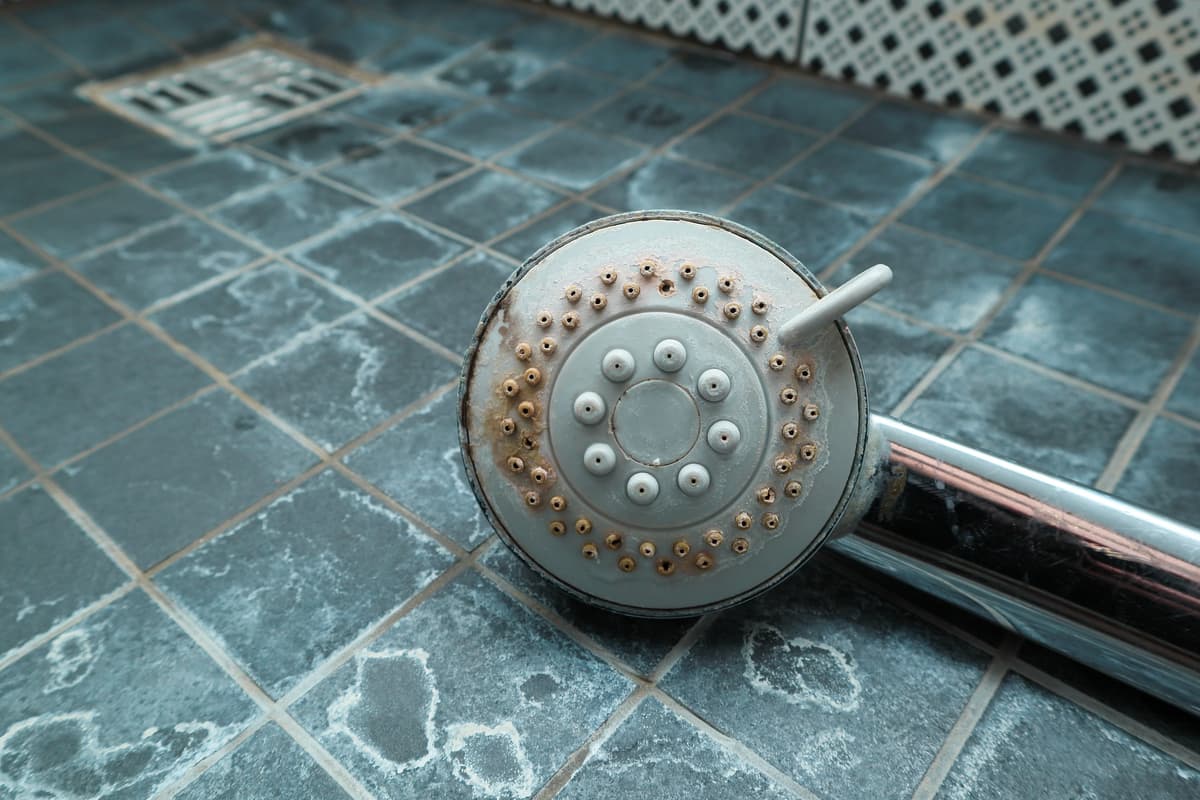
Vinegar and baking soda genuinely remove calcium buildup from fixtures, shower heads, and slow drains. Inside your supply pipes, it's a different story: established scale doesn't dissolve on a DIY budget, and the real answers are professional drain clearing or hydro jetting, a water softener to stop new scale from forming, and repiping when old galvanized lines have scaled nearly shut.
On this page:
Fixtures vs. Pipes: Two Different Problems
The Vinegar and Baking Soda Method
Cleaning Shower Heads and Fixtures
What Works Inside the Pipes
Signs of Hard Water Buildup
Beyond the Bathroom
FAQs
Hard water leaves a trail: crusty white rings on the shower head, soap that won't lather, and drains that seem to shrink a little every year.
That crust is calcium and magnesium coming out of your water, and how you remove it depends entirely on where it is. Some of it you can dissolve this afternoon. Some of it you can't, and knowing the difference saves a lot of wasted vinegar.
Fixtures and Drains vs. Inside the Pipes: Two Different Problems
On fixtures, shower heads, aerators, and the first stretch of a drain, mineral deposits sit where household acids can reach them. That's DIY territory, and the methods below work.
Inside pressurized supply pipes, scale builds in layers over years, along pipe walls you can't reach. Dissolving it would take an acid strong enough to threaten the pipe itself, held in contact for a day or more, which is why plumbers don't chemically treat the inside of supply lines. Anyone promising a quick pour-in fix for in-pipe scale is selling something.
So the honest playbook is: clean what you can reach, stop new scale at the source, and bring in professional tools for what's already established deep in the system. Here's each piece.
The Vinegar and Baking Soda Method for Slow Drains
What you'll need: a box of baking soda, a jug of white vinegar, a kettle of hot water, and a rag or stopper.
Steps:
Clear standing water and debris from the drain opening.
Pour about half a cup of baking soda down the drain.
Follow with one to two cups of white vinegar. The fizz is the reaction working on buildup.
Plug the drain with the rag or stopper so the reaction pushes into the pipe rather than out the opening.
Let it sit at least 30 minutes; for mineral-heavy drains, cover and leave it overnight.
Flush thoroughly with hot tap water for a minute or two.
Tips & insights: this treatment shines as maintenance. Monthly use keeps mineral film and soap scum from ever maturing into a clog. It will freshen a slow drain, but it won't restore water pressure lost to scaled supply lines, because it never touches them.
Cleaning Shower Heads, Faucets, and Aerators
The overnight soak
Steps: unscrew the shower head (wrap the connection with a rag if you're using a wrench), submerge it in a bowl of white vinegar, and leave it overnight. In the morning, scrub the spray holes with an old toothbrush, rinse, and reinstall. Spray patterns come back dramatically.
The bag trick
Can't remove the fixture? Fill a plastic bag with vinegar, submerge the shower head or faucet spout in it, and secure the bag with a rubber band. Same overnight soak, no wrench involved.
Don't forget the aerators
Weak flow at a bathroom or kitchen faucet is often just a scaled aerator: the little screen at the spout's tip. Unscrew it by hand, soak the parts in vinegar for an hour, brush, and reassemble. It's a ten-minute fix that gets mistaken for a plumbing problem constantly.
Two cautions. On natural stone or living finishes (unlacquered brass, oil-rubbed bronze), straight vinegar can etch or spot; dilute it or use a cleaner rated for the surface. And commercial calcium-lime-rust removers are effective on fixtures, but they're for fixtures only: follow the label, and never pour them into supply lines.
What Actually Works Inside the Pipes
Hydro jetting for scaled drains
For drain lines where scale and buildup have taken real hold, hydro jetting is the professional answer: a high-pressure water stream that scours deposits off the pipe's interior walls rather than punching a hole through the middle the way a snake does. It restores the pipe's full diameter, which is why jetted drains stay clear so much longer.
A water softener to stop the cycle
Every method above is cleanup. A whole-home water softener is prevention: it removes the calcium and magnesium before the water enters your plumbing, which means no new scale in pipes, on fixtures, or inside appliances.
Parts of Gold Medal's New Jersey and New York service area run moderately hard to hard water, and homes on those streets fight this battle continuously until a softener ends it. A softener also protects the water heater, where scale quietly steals efficiency; if your tank has started rumbling, that's sediment talking, and our water heater repair team hears it weekly.
Repiping when scale has won
In older homes with galvanized steel supply lines, decades of internal scale and corrosion narrow the pipes like clogged arteries. The signature is water pressure that faded gradually over years, sometimes with discoloration. No cleaning method reverses that. The lasting fix is repiping with modern materials, which ends the decline instead of managing it.
Drains keep slowing no matter how much vinegar goes down them? That's the sign the buildup is beyond fixture cleaning — and exactly where our tools take over. Gold Medal's licensed plumbers (NJ 36B101277700, NY P-19273) hydro jet scaled lines, test your water's hardness, and quote softeners with free estimates and upfront pricing, 24/7 with no emergency, holiday, weekend, or after-hours fees. Call 732-638-4317.
Signs of Hard Water and Mineral Buildup
Run down this checklist:
White or greenish crust on shower heads and faucets
Soap that won't lather and a filmy feel after washing
Spots and cloudiness on glassware out of the dishwasher
Stiff, scratchy laundry
Recurring soap scum on tubs and shower doors
Whole-house water pressure declining over years
Clogs recurring across multiple drains
A water heater that rumbles or pops as it heats
The first five say your water is hard. The bolded three say the problem has moved into the pipes and equipment, which is when the professional options above stop being optional.
Beyond the Bathroom: Appliances That Collect Scale
The same vinegar chemistry maintains the appliances hard water attacks. Run a dishwasher empty with a cup of vinegar in the top rack. Run a washing machine's hottest cycle with two cups of vinegar, no clothes. Descale the coffee maker with a half-vinegar, half-water brew cycle followed by two plain-water cycles. Wipe shower doors with diluted vinegar to lift filming.
If you're doing all of this more than a couple of times a year just to keep up, that frequency is itself the case for a softener.
Why New Jersey and New York Homeowners Choose Gold Medal
Gold Medal Service has protected homes across New Jersey and New York since 1987: more than three decades, over 100,000 homeowners served, a BBB A+ rating, and licensed master plumbers behind every job.
You get free estimates with upfront pricing, on-time and 100% satisfaction guarantees, financing options, and 24/7 availability with no after-hours fees of any kind. From a ten-minute aerator fix you'd rather hand off to a whole-home softener install, call 732-638-4317 or book online with Gold Medal's drain cleaning services today.
Frequently Asked Questions
What dissolves calcium buildup in pipes?
On fixtures and drain openings, white vinegar or a commercial calcium-lime-rust remover dissolves deposits effectively. Inside supply pipes, nothing practical does: established scale requires professional removal, prevention with a water softener, or repiping in severe cases. Be wary of products promising to dissolve in-pipe scale overnight.
Does vinegar remove calcium deposits in pipes?
Vinegar works well on shower heads, aerators, fixtures, and as a drain maintenance flush, where it can sit in contact with deposits. It cannot meaningfully clear scale inside pressurized supply lines, which would require many hours of contact along the full pipe run. Use it for what it's good at: fixtures and prevention.
How do I know if my pipes have calcium buildup?
The in-pipe signatures are gradual: whole-house water pressure that has declined over years, clogs that recur across multiple drains, visible white crust at every fixture, and a rumbling water heater. One slow drain is a clog. The same symptoms appearing everywhere is scale, and it warrants a professional assessment.
Will a water softener remove existing buildup?
A softener's job is prevention: it stops new scale by removing hardness minerals before water enters your plumbing. Existing deposits may soften and diminish slightly over time in some systems, but a softener is not a removal tool. Pair it with professional clearing of what's already there for the full fix.
Is calcium buildup in pipes dangerous?
It isn't a health hazard, since calcium and magnesium are safe to drink. The damage is mechanical and financial: shrinking pipe diameter, falling pressure, strained appliances, an inefficient water heater, and eventually clogs or premature pipe replacement. The earlier you interrupt the cycle, the cheaper the story stays.
When do scaled pipes need to be replaced?
When the pipes are older galvanized steel with years of gradual pressure loss, recurring discoloration, or leaks, cleaning no longer helps, because the scale and corrosion are part of the pipe wall itself. That's when repiping with modern materials becomes the lasting fix. A camera inspection can confirm where your system stands.
Related Articles
What do you need help with today?
Heating
No heat, strange smells, rising bills? We repair and replace heating systems to keep your home reliably warm.
Air Conditioning
AC blowing warm air? Uneven cooling in your rooms? We fix cooling issues fast and keep your system running smoothly all summer.
Plumbing
Our highly trained plumbers handle it all, from leaky faucets to full system installations and repipes.
Electrical
The smartest team in town. You need repair, installations, wiring, inspections, lighting — you name it.