
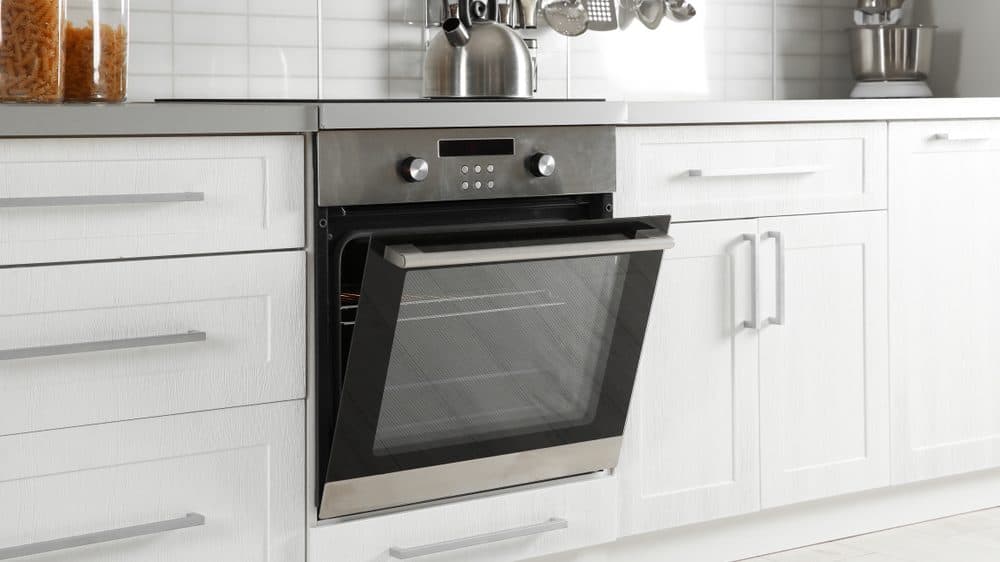
An oven that keeps tripping its breaker is signaling one of four problems: an overloaded circuit, a short circuit, a fault inside the oven itself (most often the bake or broil element, the terminal block, or the control board), or a ground fault. One deliberate reset is fine. If it trips again, stop resetting and diagnose, because repeated trips mean the breaker is protecting you from something real.
On this page:
What a Tripping Breaker Is Telling You
The 4 Causes, Expanded
The Trip-Timing Diagnostic
What You Can Safely Check Yourself
What Drives the Cost of the Fix
FAQs
Dinner is in the oven, the kitchen goes quiet, and half the room's power is gone. Again.
When the power goes out over and over, the temptation is to treat the breaker as the problem. It almost never is. The breaker is the messenger, and the message is worth reading before the third reset.
What a Tripping Breaker Is Actually Telling You
A circuit breaker has one job: protecting the wiring behind your walls. When the current flowing through a circuit exceeds what that wiring can safely carry, the breaker opens and cuts the power before the wire overheats.
An electric oven represents one of the largest loads in your home. It typically runs on its own dedicated 240-volt circuit with a double-pole breaker (the wide one in your panel with a single handle bridging two slots). A gas range is different: it plugs into an ordinary 120-volt circuit just to run the igniter, clock, and controls.
That distinction matters for diagnosis. If an electric oven trips its own dedicated breaker, the problem is almost always the oven, its cord, or that circuit. If a gas range trips a breaker, the culprit is usually the shared circuit, not the appliance's burners.
The 4 Causes of a Tripped Breaker, Expanded
Circuit overload, short circuiting, ground faults, and a fault within the oven itself can all trip a breaker.
1. Circuit Overload
A circuit overload happens when the devices on one circuit collectively draw more current than the wiring can manage. The breaker does exactly what it should and opens.
With a true dedicated oven circuit, overload is uncommon. It shows up when the oven shares a circuit it shouldn't, such as in older kitchens, or when a countertop full of appliances runs at the same time as a gas range's electronics.
The practical test: notice whether the trips only happen when something else is running. Oven plus microwave plus air fryer at 5:30 p.m. is the classic pattern. If redistributing those loads stops the trips, you've found the cause, though a kitchen that can't run dinner without load-juggling is a kitchen that needs another circuit.
2. Short Circuit
A short circuit happens when a hot wire touches a neutral wire or another hot wire. Current bypasses the intended path, the amperage spikes instantly, and the breaker snaps open, usually the moment you reset it.
Shorts develop where insulation fails: heat-brittled wiring behind a decades-old range, a damaged cord pinched against the wall, or a connection that has been arcing quietly for years. Aging electrical systems see more of them, which is why the same kitchens tend to produce them repeatedly.
An instant re-trip on reset is the signature. Stop resetting at that point. We cover how these faults develop in our guide to the causes of short circuits.
3. A Fault Inside the Oven Itself
Several components inside the oven can leak current or draw too much of it:
The bake or broil heating element. The single most common culprit. Elements blister, split, or short against their metal sheath as they age. The tell: trips at preheat (bake element) or only when broiling (broil element). A failing element sometimes shows visible blistering or a bright spot when hot.
The terminal block. The junction behind the oven where the supply cord lands. Years of heating and cooling loosen those connections, and loose connections overheat and arc.
The control board or a relay. When a board fails, it can call for current in ways the circuit was never meant to deliver, producing trips with no pattern at all.
Moisture. A big spill, an aggressive cleaning session, or a self-clean cycle can leave moisture on internal connections. If the oven starts tripping right after cleaning day, that timing is the diagnosis, and it often resolves as things dry out.
A malfunctioning oven should be repaired before it goes back into service. Forcing it to run by resetting the breaker over and over stresses both the appliance and the circuit.
4. Ground Fault
A ground fault is a specific kind of short: a hot wire contacting a grounded surface, such as the oven's own metal chassis. Current takes the path it never should, and the breaker (or a GFCI protecting the circuit) opens immediately.
Ground faults deserve respect because the same fault that trips a breaker can energize metal surfaces if protection fails. Proper grounding is what keeps that scenario boring. Our explainer on why grounding and bonding matter covers the details.
The Trip-Timing Diagnostic
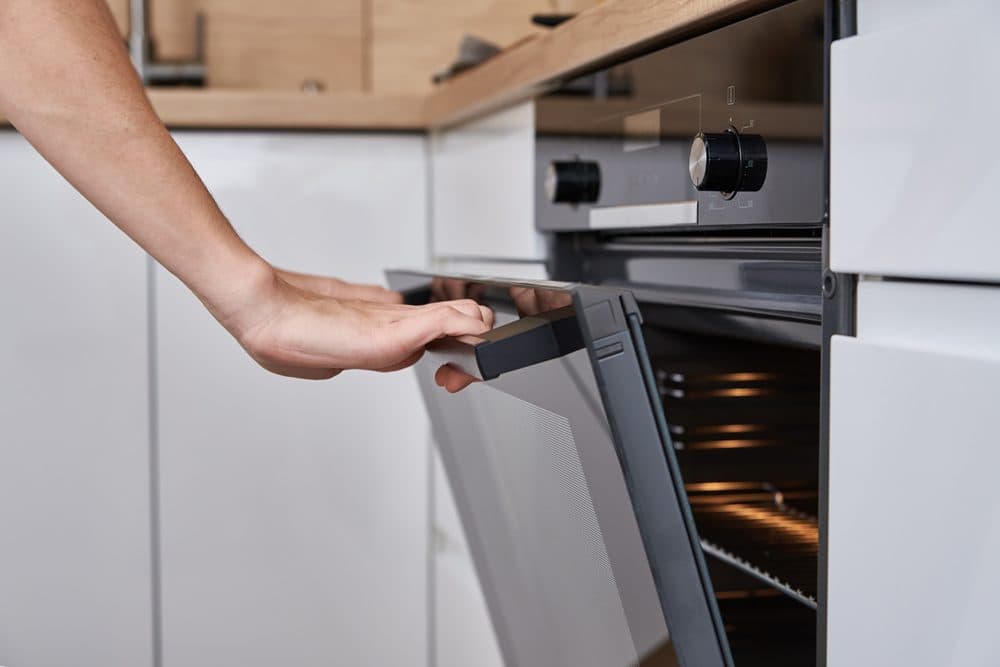
The single most useful thing you can do before calling anyone is notice when the trips happen. The timing points to the cause:
When it trips | Most likely cause |
During preheat | Failing bake element |
Only on broil | Failing broil element |
Right after cleaning or a self-clean cycle | Moisture on internal connections |
Only when other appliances are running | Circuit overload |
Instantly, every time you reset | Short circuit or ground fault |
No pattern at all | Control board, relay, or loose terminal block |
Bring that observation to whoever diagnoses the problem and you'll shorten the visit considerably.
Trips keep coming back, or the breaker re-trips instantly? That's not a nuisance to live with — it's an electrical safety issue, and it's exactly what we're built for. Gold Medal has served New Jersey and New York since 1987 with licensed master electricians (NJ 36B101277700, NY P-19273), 24/7 availability, and no emergency, holiday, weekend, or after-hours fees, ever. Call 732-638-4317 or schedule your circuit breaker service directly and we'll find what the breaker is protecting you from.
What You Can Safely Check Yourself
There's a clear line between homeowner checks and licensed work. On the safe side of it:
Reset the breaker once, deliberately, and note what happens. Check whether other appliances share the circuit and unplug them to isolate the pattern. Look through the oven window during preheat for a visibly blistered or unevenly glowing element. Note the trip timing from the table above.
Everything else belongs to a professional. The terminal block sits behind the range at 240 volts. The panel, the breaker, and the circuit wiring are licensed-electrician territory. And one rule matters more than the rest: never "solve" tripping by installing a bigger breaker. The breaker size protects the wire. Oversizing it silences the messenger while the wire overheats in the wall.
Who to call depends on where the fault lives: an appliance repair tech handles elements and control boards, while an electrician handles the cord, outlet, wiring, breaker, and panel. If the diagnosis isn't obvious, start with the electrical side, since that's where the fire risk lives. Gold Medal's circuit breaker repair and installation team sees this exact call weekly.
What Drives the Cost of the Fix
No two of these repairs price the same, so here's what actually moves the number rather than a made-up average.
The biggest factor is where the fault is: a heating element is a quick appliance repair, wiring and breaker faults are electrician work, and an aging panel that can't handle a modern kitchen is a bigger conversation about an electrical panel upgrade. Accessibility matters too, along with the age of the wiring and whether other circuits show the same symptoms.
Gold Medal provides free estimates and upfront pricing before any work begins, so you'll know the number before anyone opens the panel.
Why New Jersey and New York Homeowners Choose Gold Medal
Gold Medal Service has protected homes across New Jersey and New York since 1987: more than three decades, over 100,000 homeowners served, and a BBB A+ rating, with licensed master electricians behind every job.
You get free estimates with upfront pricing, on-time and 100% satisfaction guarantees, financing options, and 24/7 emergency service with no after-hours fees of any kind. A breaker that keeps tripping has a reason. Call 732-638-4317 or book online with Gold Medal's electrical services today.
Frequently Asked Questions
Why does my oven keep tripping the breaker?
One of four causes: an overloaded circuit, a short circuit in the wiring, a fault inside the oven (heating element, terminal block, or control board), or a ground fault. The timing of the trips usually points to which one, and repeated trips mean the circuit needs diagnosis, not more resets.
Why does my oven trip the breaker when preheating?
Preheat is when the bake element draws its heaviest, sustained current, so a blistered or internally shorted element usually fails right then. Look through the window for uneven glowing or visible damage. Element replacement is a routine appliance repair, but confirm the circuit and breaker are healthy too.
Can a faulty heating element trip a circuit breaker?
Yes, and it's the most common oven-side cause. When an element's outer sheath cracks, the live coil inside can contact grounded metal, creating a surge the breaker reacts to instantly. A visibly blistered, split, or unevenly glowing element is the classic confirmation.
Is it safe to keep resetting a tripped breaker?
Reset once, deliberately. If it trips again, stop. Every additional reset pushes current through whatever fault is causing the trip, and if that fault is arcing wiring, repeated resets add heat exactly where you can't see it. A breaker that won't hold is a diagnosis call, not a reset routine.
Should I call an electrician or an appliance repair tech?
Trips tied to the oven's heating cycle (preheat, broil) point to the appliance, so an appliance tech fits. Instant re-trips, warm outlets, breaker buzzing, or trips affecting other devices point to the circuit, which is electrician work. When in doubt, start with the electrician, since wiring faults carry the fire risk.
Why did my oven trip the breaker after I cleaned it?
Moisture from a heavy cleaning or a self-clean cycle can reach internal electrical connections and leak current to ground until it dries. If trips start immediately after cleaning day, give the oven time to dry fully. If tripping continues after a day or two, have the connections inspected.
Related Articles
What do you need help with today?
Heating
No heat, strange smells, rising bills? We repair and replace heating systems to keep your home reliably warm.
Air Conditioning
AC blowing warm air? Uneven cooling in your rooms? We fix cooling issues fast and keep your system running smoothly all summer.
Plumbing
Our highly trained plumbers handle it all, from leaky faucets to full system installations and repipes.
Electrical
The smartest team in town. You need repair, installations, wiring, inspections, lighting — you name it.